When a shipment stops at port, knowing who controls the ship and who controls the terminal saves time and cost.
When something goes wrong at a port, the first question is always the same: Who is actually responsible?
The answer depends on whether the issue falls under vessel operations or port operations. These two roles work closely together—but they are not the same.
Knowing the difference helps shippers avoid delays, blame loops, and unnecessary costs.
What Are Vessel Operations?
Vessel operations cover all activities related to how a ship is planned, managed, and sailed while calling at a port.
This includes ensuring the vessel arrives on time, follows port rules, coordinates required services, completes cargo operations as scheduled, and departs without delay.
Vessel operations are handled by the vessel operator, whose responsibility is to keep the ship compliant, on schedule, and ready to sail.
When vessel operations fail, delays usually start before cargo even reaches the terminal.
What Vessel Operations Include
Vessel operations focus entirely on the ship, not the terminal.
They typically include:
- Voyage planning and arrival scheduling
- Pre-arrival filings and regulatory notices
- Berth requests and coordination
- Cargo loading or unloading planning
- Crew, fuel, and ship service arrangements
- Sailing clearance and departure timing
These activities remain under the control of the vessel operator. If filings are late or arrival windows are missed, delays originate here.
What Are Port Operations?
Port operations cover all activities related to how cargo is handled inside the port or terminal.
These begin once the vessel is alongside the berth and continue until the cargo exits the terminal.
Port operations are managed by port authorities or terminal operators, not the vessel operator.
Even when a vessel arrives on time, weak port operations can still slow cargo movement.
What Port Operations Include
Port operations focus on the terminal infrastructure and cargo flow, not the ship.
They typically include:
- Berth allocation and yard planning
- Crane and equipment operations
- Cargo loading and unloading execution
- Storage and stacking within the terminal
- Gate operations and truck movement
At congested ports such as Nhava Sheva or Mundra, delays often start at this stage due to yard backlogs or equipment constraints—even when vessel operations are on schedule.
The Key Differences between Vessel Operations and Port Operations
Both functions impact shipment timelines, but they control different parts of the process.
Area
Vessel Operations
Port Operations
Main focus
Ship planning and movement
Cargo handling and terminal flow
Controlled by
Vessel operator
Port or terminal operator
Starts
Before vessel arrival
When vessel berths
Ends
At sailing clearance
When cargo exits the terminal
Common risks
Late arrival, missed filings
Congestion, slow handling
Understanding this split helps shippers identify where delays originate and who is responsible for resolving them.
Who Is Responsible When Delays Happen?
Not all delays come from the same source. Knowing where the delay starts allows faster action and prevents finger-pointing.
Delay Type
Responsibility
Vessel arrives late
Vessel operations
Missed arrival or berth window
Vessel operations
Wrong or late pre-arrival filings
Vessel operations
Crew, fuel, or ship service delays
Vessel operations
Sailing clearance not received
Vessel operations
Berth congestion
Port operations
Slow crane or equipment handling
Port operations
Yard or storage backlog
Port operations
Gate or truck movement delays
Port operations
Clear responsibility reduces downtime and prevents unnecessary cost escalation.
Why This Difference Impacts Cost
When responsibility is unclear, costs rise quickly.
Delays caused by vessel operations often lead to:
- Missed berthing windows
- Extended anchorage waiting
- Additional service and compliance costs
Delays caused by port operations often result in:
- Demurrage and storage charges
- Idle trucking and equipment costs
- Missed delivery commitments
Understanding who controls which stage helps shippers act early and avoid avoidable expenses.
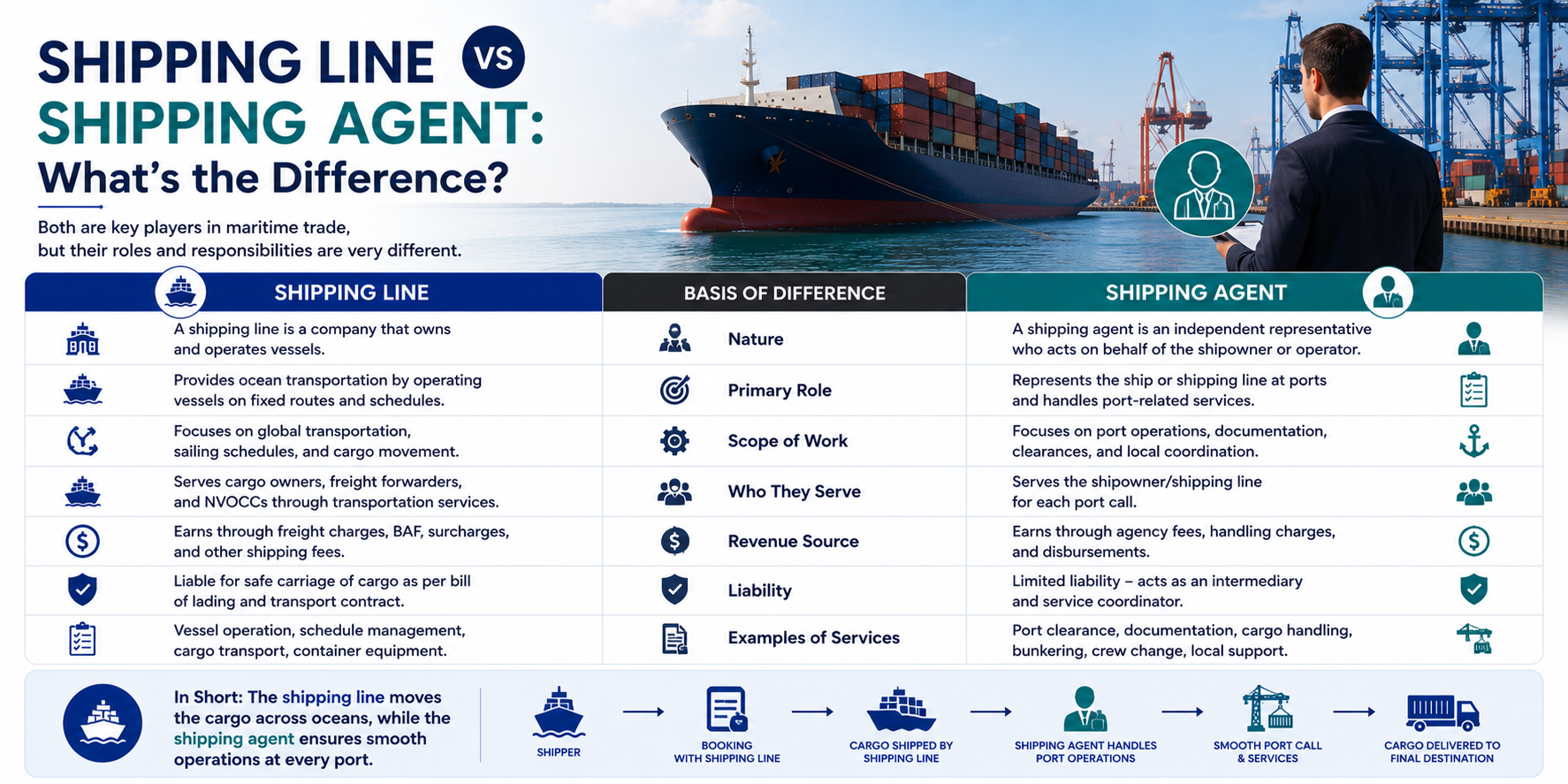
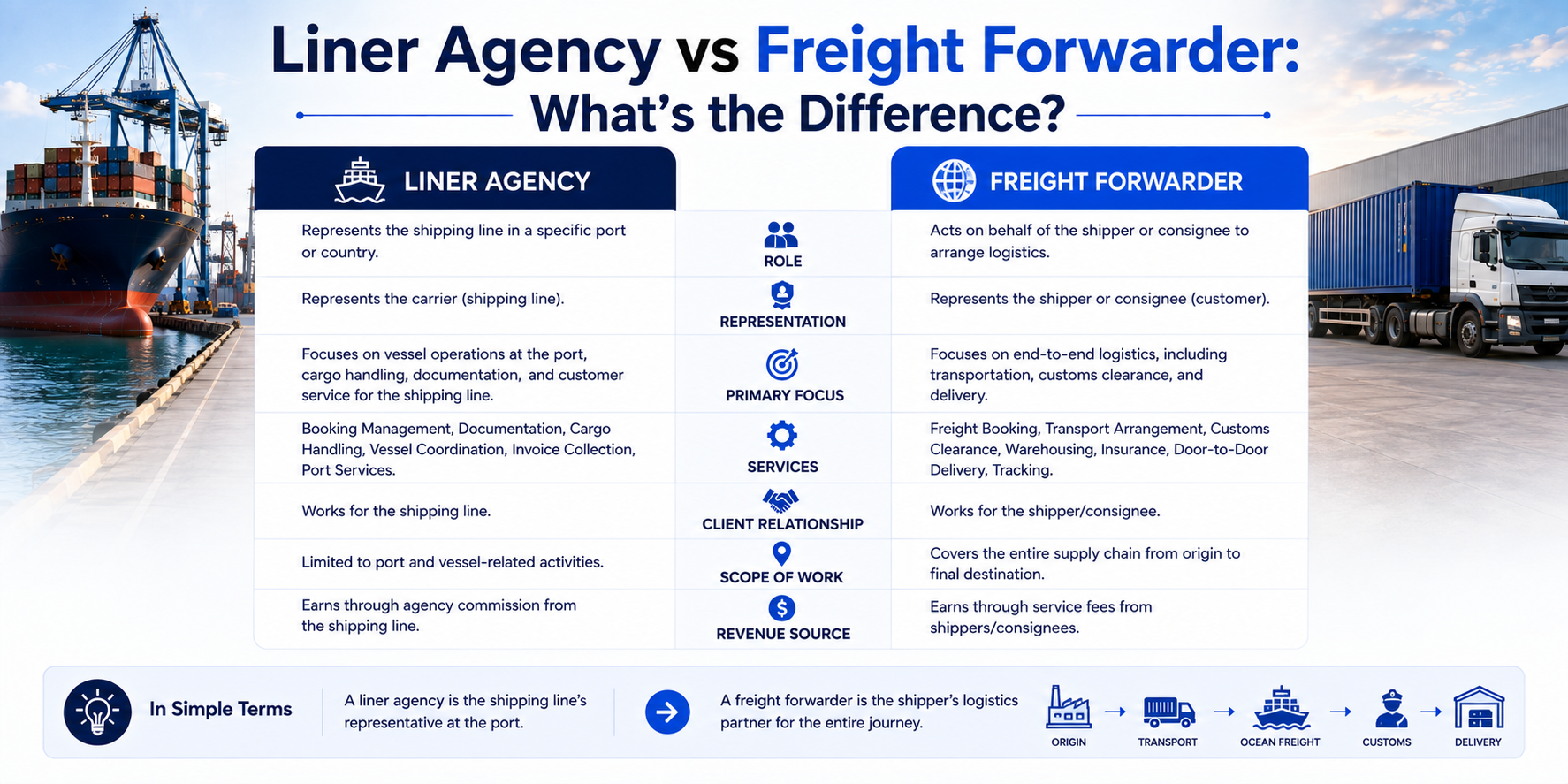
How SJ Logistics Supports Direct Vessel Operations
SJ Logistics India Ltd operates as the agent of S J Logisol Shipping LLC, Dubai, supporting its direct vessel operations.
Through this structure, SJ Logistics supports tighter control over planning and execution compared to standard forwarding models.
SJ Logistics supports direct vessel operations by:
- Representing S J Logisol Shipping LLC at Indian ports
- Managing fixed service rotations
- Supporting regular sailing frequency
- Coordinating vessel arrival and departure schedules
- Assisting with transit time planning
This setup allows better predictability for shippers using these services.
Why Direct Vessel Operations Matter for Shippers
When vessel schedules are controlled, outcomes improve.
Direct vessel operations help shippers by:
- Offering fixed sailing schedules
- Reducing reliance on third-party carriers
- Improving transit time reliability
- Increasing route and schedule visibility
- Minimizing last-minute changes
For trade lanes where timing matters, this stability is a major advantage.
FAQs: Vessel Operations vs Port Operations
1. Are vessel operations and port operations the same? No. Vessel operations manage the ship’s planning, arrival, and sailing. Port operations manage cargo handling inside the terminal.
2. Who controls vessel operations? Vessel operations are controlled by the vessel operator. In this case, SJ Logistics India Ltd acts as the agent of S J Logisol Shipping LLC, Dubai, supporting direct vessel operations.
3. Who controls port operations? Port authorities or terminal operators control port operations. Vessel operators do not manage cranes, yards, or gate movement.
4. If cargo is delayed at port, who is responsible? Responsibility depends on where the delay starts. Ship-related delays fall under vessel operations, while terminal-related delays fall under port operations.
5. Does a logistics company handle both vessel and port operations? Most logistics companies coordinate shipments. Vessel operations are handled by vessel operators, while port operations remain with the terminal.
Know Where Responsibility Starts and Ends
Vessel operations and port operations are connected—but they do not overlap.
- Vessel operations control how a ship is planned, scheduled, and sailed.
- Port operations control how cargo is handled once the vessel is alongside.
When roles remain clear:
- Delays are resolved faster
- Costs stay under control
- Communication improves
SJ Logistics India Ltd, acting as the agent of S J Logisol Shipping LLC, Dubai, supports direct vessel operations with defined routes and sailing schedules. This gives shippers clearer expectations on transit time, while port operations remain managed by the terminal.
Knowing this difference helps you ask the right questions, contact the right party, and avoid wasted time when issues arise.
For clear vessel schedules and predictable sailings, connect with SJ Logistics India Ltd.
Tags- Import & Export
- Vessel Operator
- Port Operator
- Vessel Operations vs Port Operations
- Shipping Agents
- Liner Agencies
- Shipping Line
- Liner Agencies
- Liner Agencies