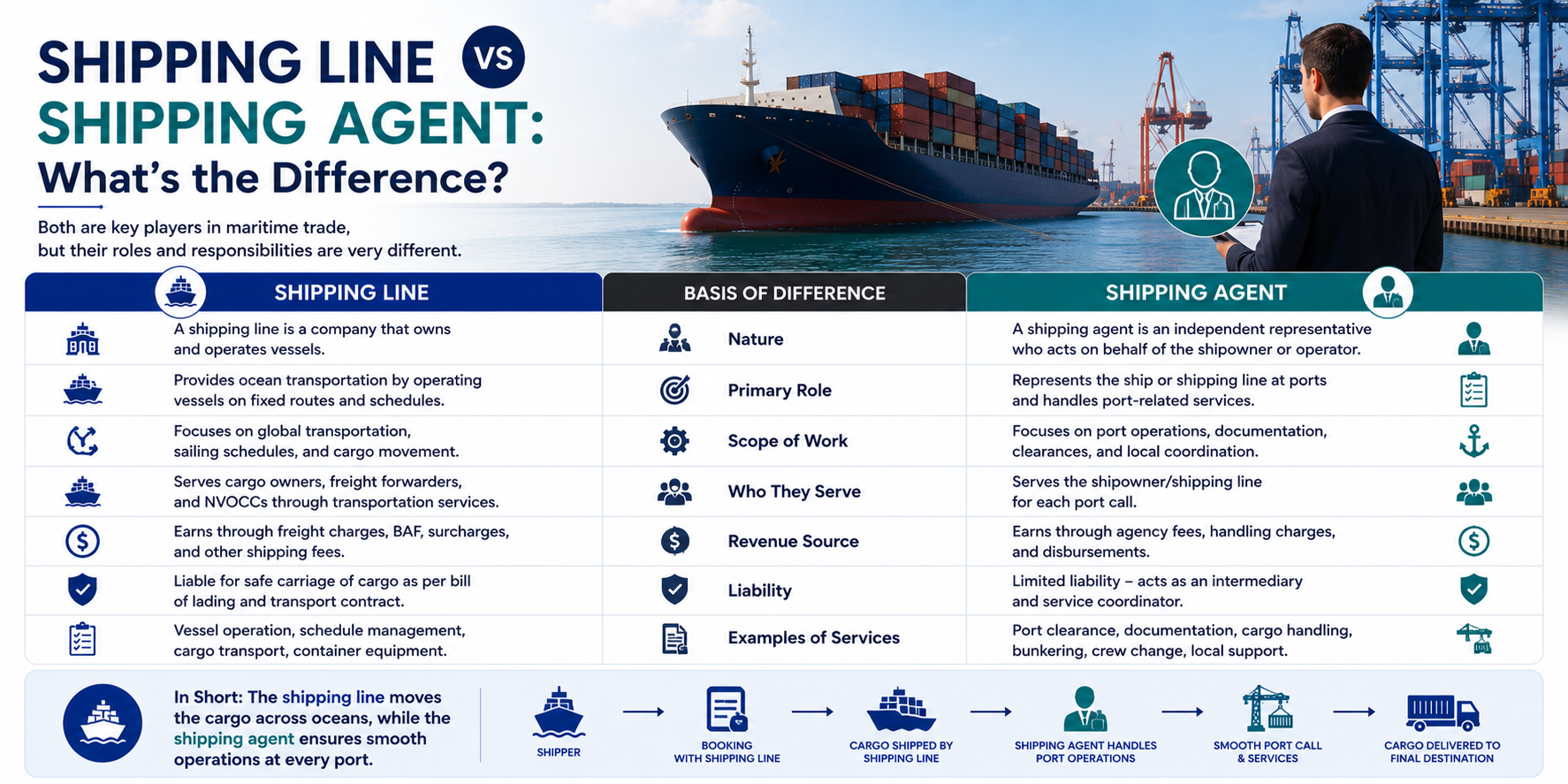
People often use the terms 'shipping line' and 'shipping agent' interchangeably, but they perform different roles in international shipping. A shipping line operates vessels and transports goods between ports, and the shipping line's representative at the port is a shipping agent responsible for operating a vessel at each port.
Importers, exporters, freight forwarders, and logistics professionals need to understand this difference. It provides businesses with information about who to contact and the operation of vessels, documentation, and port operations, among other things.
What is a Shipping Line?
A shipping line is a business that owns, charters, or operates cargo ships that carry goods from one port to another, either within a country or across a sea. It is charged with transporting goods from one place to another along fixed trade routes to ensure their safe and timely arrival at their final destinations.
A shipping line does more than just run ships; it schedules sailing times, controls container fleets, takes up cargo orders, and handles freight transport throughout the world. Shipping lines also have close collaboration with freight forwarders, logistics companies, and shipping agents to ensure that the movement of cargo is efficient.
Important Duties of a Shipping Line
Responsibility
Description
Operate cargo vessels
Transport containers between ports
Plan sailing schedules
Continue shipping as normal
Manage container fleets
Ensure equipment availability
Accept cargo bookings
Reserve space for shipments
Transport cargo
Transport goods on domestic and international routes
Appoint shipping agents
Coordinate local port activities
Simply put: A shipping line carries goods by ship, and each port will have a shipping agent to oversee cargo operations.
Who is a Shipping Agent?
Shipping agent: Company or local representative who is given the authority by a shipping line to run the affairs of a vessel during her call. The shipping agent does not move cargo but instead works to ensure that the vessel arrives and departs and that it spends time in the dock area without problems.
Shipping agents are also responsible for port documentation, berth allocation, cargo handling coordination, and providing shipping line updates on the activities and regulations in the port.
Key Responsibilities of a Shipping Agent
Responsibility
Description
Schedule vessels' arrival and departure times to coincide
Smooth Port Calls – Make sure that goods move as they should in ports
Arrange berth allocation
Cooperate with the port and terminal operators
Manage port documentation
Attend to local formalities as needed
Coordinate cargo operations
Help put away and retrieve items from the loading dock
Liaise with local authorities
Contact Customs & Port Authorities
Represent the shipping line
Act as the shipping line's local point of contact
In simple terms: A shipping agent is responsible for all that is required on the ship at the port, while the shipping line would be responsible for moving the goods between ports.
Shipping Line vs Shipping Agent: The Differences
While a shipping company and a shipping agent work hand-in-hand, they still have different tasks to accomplish. The shipping line is responsible for moving goods from port to port, and the shipping agent is responsible for the operations of the vessel when in port.
Aspect
Shipping Line
Shipping Agent
Primary Role
Carries goods by ship
Operates vessels at port
Represents
Own shipping business
Line of shipping at a local port
Main Responsibility
Drives ships and controls shipping operations
Coordinates the port operations and documentation
Area of Operation
International trade routes
Specific port/country
Cargo Bookings
Takes and handles reservations
Can be coordinated locally if needed
Sailing Schedules
Outlines and plans schedules for events and activities
Reports when vessels are coming into and going from port
Port Coordination
Works through appointed agents
Synchronized with ports, terminals, and customs
Main Customers
Importers, Exporters, Freight Forwarders, Logistics Companies
Stakeholders for shipping lines and port companies
The shipping line's role is to transport goods through oceans, and the shipping agent's job is to complete the shipping operations at the port efficiently and according to local rules.
How Shipping Lines and Shipping Agents Work Together
There are a variety of steps involved in the process of shipping.
A shipping shipment is a shipment that's handled by a shipping line and a shipping agent but at different points in the shipping process. The shipping line has responsibility for the movement of the ship, and the shipping agent for local duties in the port on arrival and departure.
Shipping Stage
Responsible Party
Cargo booking
Shipping Line
Sailing schedule
Shipping Line
Container transportation
Shipping Line
Arrival of the vessel to port
Shipping Agent
The coordination of berths and terminals
Shipping Agent
Port documentation
Shipping Agent
Co-ordinating Customs and local authorities
Shipping Agent
Vessel departure
Shipping Agent
The alliance enables shipping companies to sail on international trade routes without having to hold offices in all ports. They can leverage local shipping agents to ensure ships adhere to port regulations, timely submit documentation, and reduce delays in operations.
Frequently Asked Questions
1. What is the distinction between shipping line and shipping agent?
A company that owns, leases, or operates a cargo vessel for shipping goods between ports. A shipping agent is a representative of the shipping company at a particular port and is responsible for handling ships, documentation, and other related matters with the local authorities.
2. Do ships belong to or be run by a shipping agent?
No. A shipping agent is not the owner of or operator of ships. Their job is to carry out the shipping line's actions, organizing port operations, official procedures, and vessel services during a port call.
3. Where can I book my cargo?
Cargo bookings, sailings, or availability of containers should be arranged with the shipping line or its commercial representative. The primary functions of the shipping agents are related to the vessels that are being moved in and out of the port.
4. Is it possible to ship without a shipping line?
A shipping line is responsible for managing sea transport but typically has a shipping agent at each port that will deal with local regulations, documentation, and coordination of operations. This assists in the proper running of the vessel and adherence to port needs
5. What is the relationship between shipping lines and shipping agents?
The shipping line is responsible for carrying freight between ports, and the shipping agent handles all the operations of the ship at each port. As a whole, they make the cargo flow smoothly and the operation of the ships smooth.
6. What is the difference between a freight forwarder and a shipping agent?
No. A shipping agent acts on behalf of the shipping line and oversees operations of the ships at the port. A freight forwarder is a company that acts as a liaison between an importer or exporter and shipping lines and carriers to arrange the shipping of goods.
Why It Matters
Selecting the appropriate point of contact can help to streamline the shipping process and ensure better coordination. Therefore, businesses need to grasp the difference between the shipping line and the shipping agent to communicate clearly and facilitate smoother international shipping operations.
Tags- Shipping Lines
- Shipping Agents
- Shipping Line vs Shipping Agent
- Shipping Line
- Shipping Agents
- Liner Agencies
- Freight Forwarder
- Shipping Agents
- Liner Agencies
- Shipping Line
Let's move your world — together
Logistics insight, market updates, and the occasional story from the field — straight to your inbox. No spam, just signal.
Or request a shipping quote
End-to-end freight forwarding, NVOCC, project cargo, warehousing and customs — connecting your world since 2003.
Solutions
Company
Investors
Get in touch
Some keep the site working; the optional ones tell us which pages are useful. You choose. Read our privacy policy.