
You run tight margins. One bad bill of lading can wipe out a month’s profit. Last week, your team issued an HBL that said prepaid, while the carrier's MBL said collect.
The consignee refused pickup. Storage kicked in. Your client blamed you.
If you’re an NVOCC in India, this is the kind of mess that drains cash and trust.
NVOCC in India — What is it?
An NVOCC books space with vessel lines and issues its own House Bill of Lading (HBL) to the customer. The ocean line issues the Master BL (MBL) to the NVOCC. A clear HBL/MBL split keeps duties clean and cuts disputes.
You act as the carrier to your shipper and as a customer to the ocean carrier.
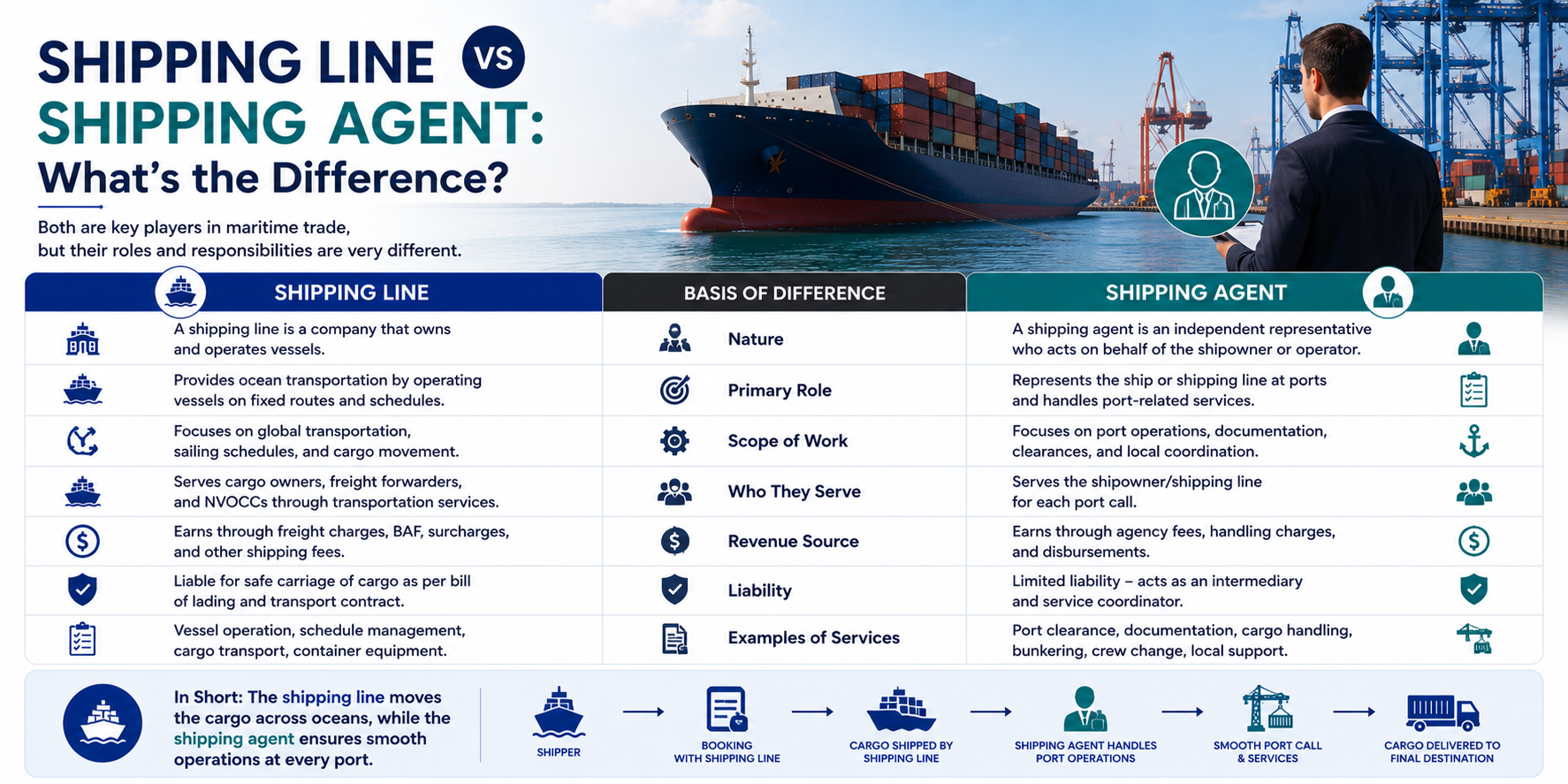
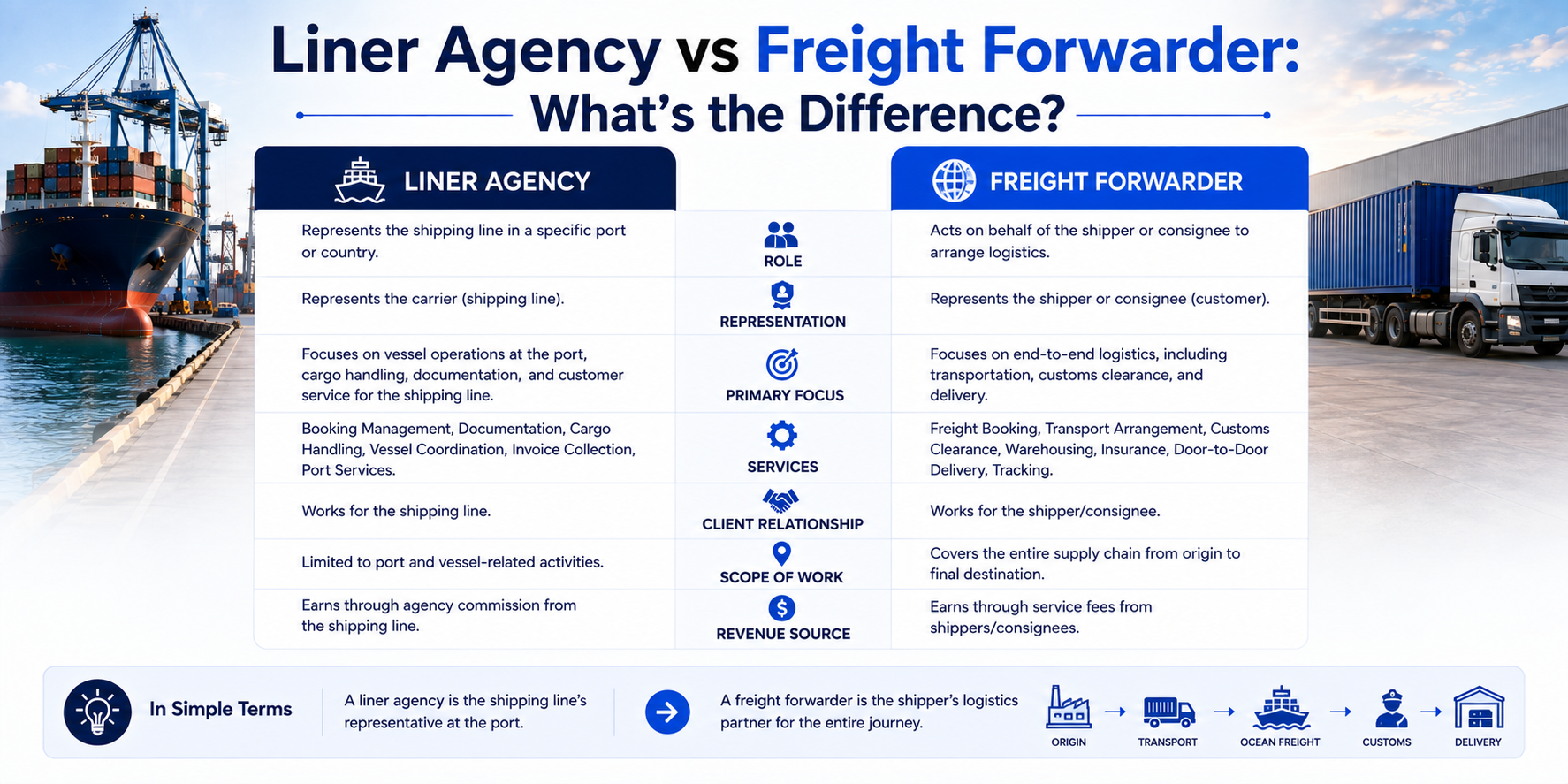
Where this fits in your ops: If you issue HBL, manage carrier bookings, and own client terms, you’re acting as principal. If a local partner handles port work and filings, that’s a host agent. Role clarity avoids blame and extra costs.
Why it matters now: Tight equipment, vessel bunching, and rate swings hit NVOCCs first. Teams with tight HBL/MBL checks, clear role SOPs, and early container planning ride out these shifts better.
Licenses & registrations you should set up (India)
Start with the basics: Register your business (PAN, GST, IEC). Set a clean SOP for KYC, shipper onboarding, and BL issuance. Tie this to your NVOCC service scope so sales and ops work the same playbook.
MTO registration (DG Shipping): Most Indian NVOCCs operate under an MTO setup. It lets you issue your transport document and strengthens your standing with shippers and carriers. Keep your bank guarantee/insurance and renewal dates on a tracker.
Customs & filings readiness: Align your team for timely manifest/HBL data filing and port documentation. Build a checklist for who files, when, and on which system, and keep a fallback if a portal is down.
Trade-lane extras: For certain lanes (e.g., U.S.), you may need extra registrations and tariffs. Add a lane-by-lane compliance sheet and review it every quarter. Keep contract templates ready for agents and carriers.
Insurance: Set cargo liability cover and errors & omissions. Make it part of your customer proposal and your agent contracts. Add claim steps to your BL pack.
Action checklist
- Company docs in place (PAN, GST, IEC)
- MTO registration live; renewal tracker set
- BL pack finalized (HBL, terms, SOP)
- Filing roles set; cutoffs mapped
- Lane compliance sheet ready
- Insurance and claim workflow added
Liability — Who pays when things go wrong
Your position: As an NVOCC, you act as a carrier to your customer. Your HBL terms set your liability and payment control. The MBL terms bind you to the ocean line. If HBL and MBL clash, you carry the gap.
Common risk pockets
- HBL vs MBL mismatch: HBL says prepaid, MBL says collect → you pay until you fix it.
- Late filing/cutoff miss: storage, demurrage, and rebooking fall on you unless your HBL puts time duty on the shipper.
- Weight/HS code errors: the lines are fine for the MBL party (you). Push back only if your HBL puts the duty on the shipper.
- Damage/shortage: the carrier points to MBL terms; your customer points to HBL. You stand in the middle.
- Wrong delivery order: extra handling and claims hit your P&L if SOPs are loose.
Set your HBL to limit exposure
- State who pays what: ocean freight, local charges, D/O, THC, amendment, and storage.
- Fix jurisdiction and dispute forum in plain words.
- Add a clear notice window for claims.
- Keep a limit of liability per package/kg in line with trade norms.
- Say documents control: when you release OBL/telex only after dues.
- Name data duties: the shipper must give true weight, HS, HSN, VGM, and marks.
When HBL beats MBL (use your HBL as the main lever)
- You need price control and don’t want your buy rate exposed.
- You plan routing changes or split deliveries with your agent.
- You run consoles and must show clean terms to many small shippers.
- You want credit control: hold release until payment clears.
- You need to switch BL or reissue at an intermediate point.
- You must standardize liability across many lines and trades.
When MBL is safer to lean on
- LC terms demand a carrier-issued BL.
- The shipper wants direct carrier liability and accepts the carrier’s rules.
- Time-critical moves where carrier priority and tracking matter most.
- Project/heavy cargo where carrier survey and clauses protect you better.
Fast decisions (10-point check)
- Does LC require MBL? → Choose MBL.
- Do you need price privacy? → Choose HBL.
- Multiple pickups/deliveries? → HBL.
- Will you switch BL? → HBL.
- Is the shipper new or high-risk? → HBL with strict release.
- Is the carrier giving priority and penalty cover? → MBL stronger.
- Are local charges contested often? → HBL with itemized charges.
- Complex tranship route? → HBL for flexibility.
- Heavy-lift or OOG? → Carrier MBL protection helps.
- Do your SOPs match the choice? → If not, fix before sailing.
SOP to stop HBL/MBL conflicts
One clean SOP beats hours of back-and-forth after arrival.
A. Pre-booking
- Confirm Incoterms and the payer of freight and local charges.
- Lock the freight term (prepaid/collect) in the CRM and booking sheet.
- Share the rate sheet and free time in writing with the shipper.
B. At booking
- Enter shipper/consignee exactly as KYC.
- Set HBL terms: charges, notice period, liability limit, law & forum.
- Mark release rule: original/telex, and who authorizes release.
- Add data duties: HS code, weight, VGM, marks—shipper confirms.
C. Carrier confirmation
- Cross-check MBL draft vs your HBL draft:
- Freight term
- Packages, weight, HS/commodity
- POL/POD, final delivery
- Free time, surcharges (PSS, GRI, WRS)
- If anything differs, fix before SI cut-off.
D. Before sailing (ops + accounts)
- Send HBL draft to shipper for sign-off.
- Issue invoice and collect dues per release rule.
- Record agent instructions for D/O, charges, and BL switch (if any).
E. After sailing (ops + destination agent)
- Share document pack: HBL, MBL, invoice, packing list, COO (as needed).
- Confirm who collects what at the destination.
- Track the container to ETA-1 week and alert the consignee on holds.
Quick table—when to use HBL vs MBL
Situation Choose Reason Need price privacy HBL Keeps your buy rate hidden Multiple deliveries/routing tweaks HBL More control on terms and release LC demands carrier BL MBL Bank condition Heavy/project cargo MBL Carrier survey & clauses help New/high-risk shipper HBL Hold release till payment Carrier offers priority with penalties MBL Better leverage on serviceDocuments to keep in your BL pack
- HBL template (short, plain terms)
- Booking checklist
- Release rules (OBL/telex)
- Charge matrix (who pays what)
- Claim notice template
- Agent SOP for D/O and amendments
When HBL clearly beats MBL — Real Scenarios You Face
Scenario 1: Price privacy matters You quoted a sharp buy rate. If the consignee sees the carrier’s MBL with your buy, your margin is exposed. Use HBL so only your sale terms show.
Scenario 2: You need routing control You plan a split delivery or an on-the-fly trans-shipment change. HBL keeps terms in your hands while you adjust with your agent.
Scenario 3: Consol with many small shippers You run one MBL with the line but multiple HBLs for each client. It keeps terms clean, release rules clear, and credit control simple.
Scenario 4: New or risky shipper Hold release until dues are clear. HBL gives you the lever to stop telex/O BL until payment lands.
Scenario 5: Switch BL mid-route Buyer changes. You need a switch. HBL flow is faster and cleaner when your SOP is tight.
Mini checklist
- Do I need to hide my buy rate? → HBL
- Will I change the routing or split delivery? → HBL
- Many shippers under one box? → HBL
- Credit risk high? → HBL with strict release
- Need a switch, BL? → HBL
When MBL is the smarter choice
Case 1: LC or bank terms If the LC says “carrier BL only”, use MBL. Do not mix formats. Ask for a copy of LC terms before you book. (Add internal link: LC checklist post)
Case 2: Heavy or project cargo Out-of-gauge, breakbulk, or high-value loads need carrier surveys and clauses. MBL gives you stronger backing with the line.
Case 3: Service priority from the carrier If the line offers slot priority, penalty cover, or free time tied to their BL, take MBL. You gain leverage when things slip.
Case 4: Shipper insists on direct carrier liability Some shippers want a single point of claim with the line. In that case, go MBL and use your sales terms to protect your margin.
Case 5: Simple point-to-point with tight timelines When the route is plain and time is tight, MBL reduces steps and speeds the DO at the destination.
Quick check before you choose MBL
- LC demands carrier BL? → MBL
- Heavy/project or high value? → MBL
- Does Carrier give priority/penalty cover? → MBL
- Shipper wants direct carrier link? → MBL
- Plain route, tight ETA? → MBL
Your BL pack — templates and checklists to lock quality
Core templates to finalize
- HBL — charges, liability cap, law & forum, claim window, release rule.
- Booking sheet — payer matrix, free time, cutoffs, SI owner, release rule.
- Agent SOP — D/O steps, who collects what, amendment flow, switch BL rules.
- Claim notice — what to send, to whom, by when.
One-page charge matrix
Charge Origin Freight Destination Notes THC Shipper / Consignee — Consignee Match sales quote D/O — — Consignee Spell out in HBL Amendment Shipper — Consignee If shipper error Storage Shipper — Consignee Tie to cutoffs Demurrage Shipper — Consignee Add free time clauseRelease rules you enforce
- Original BL: release after full payment and written OK from accounts.
- Telex release: release only after surrender + dues + proof of indemnity if needed.
- Switch BL: require written reason, all dues, and KYC for new party.
Cutoff tracker (keep it live)
- SI cutoff
- VGM cutoff
- CY cutoff
- Free time confirmation (origin/dest)
Finish Smart: HBL or MBL
You now know when HBL serves you better, when MBL is safer, and how to set terms that protect cash and trust. Put it to work this week.
Do this now
- Pick one lane and run the HBL/MBL 10-point check before SI cut-off.
- Finalize your HBL template and charge matrix.
- Align sales and ops on the release rule.
- Add the cutoff tracker to your daily stand-up.
- Review one live file for mismatch risks and fix them before sailing.
What can we help you with
- 30-minute BL template review
- Lane-wise compliance sheet setup
- Agent SOP and DO flow cleanup
- Pricing and free time playbook for your top two carriers
Clear terms. Clean files. Faster release. Better margin.
Tags- NVOCC
- HBL
- MBL
- Shipping Agents
- Liner Agencies
- Shipping Line
- Liner Agencies
- Liner Agencies