When you track a shipment, you expect it to arrive—on time, intact, no excuses.
What you don’t see are the sleepless nights, urgent calls, and quiet victories behind that smooth delivery.
Every successful voyage has someone watching over it—a liner agency, the steady beacon that keeps global trade steady even when the sea isn’t.
What Is a Liner Agency?
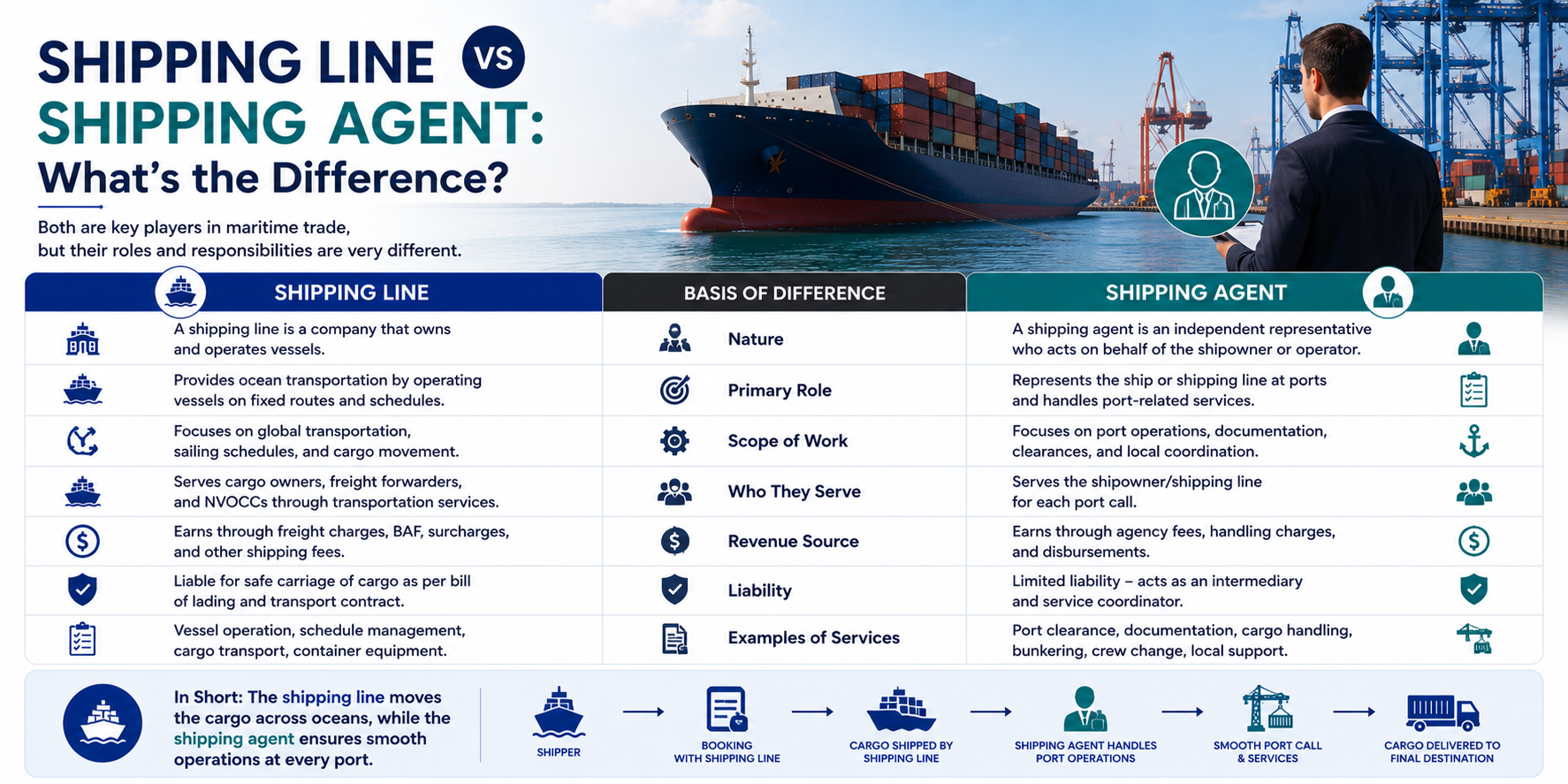
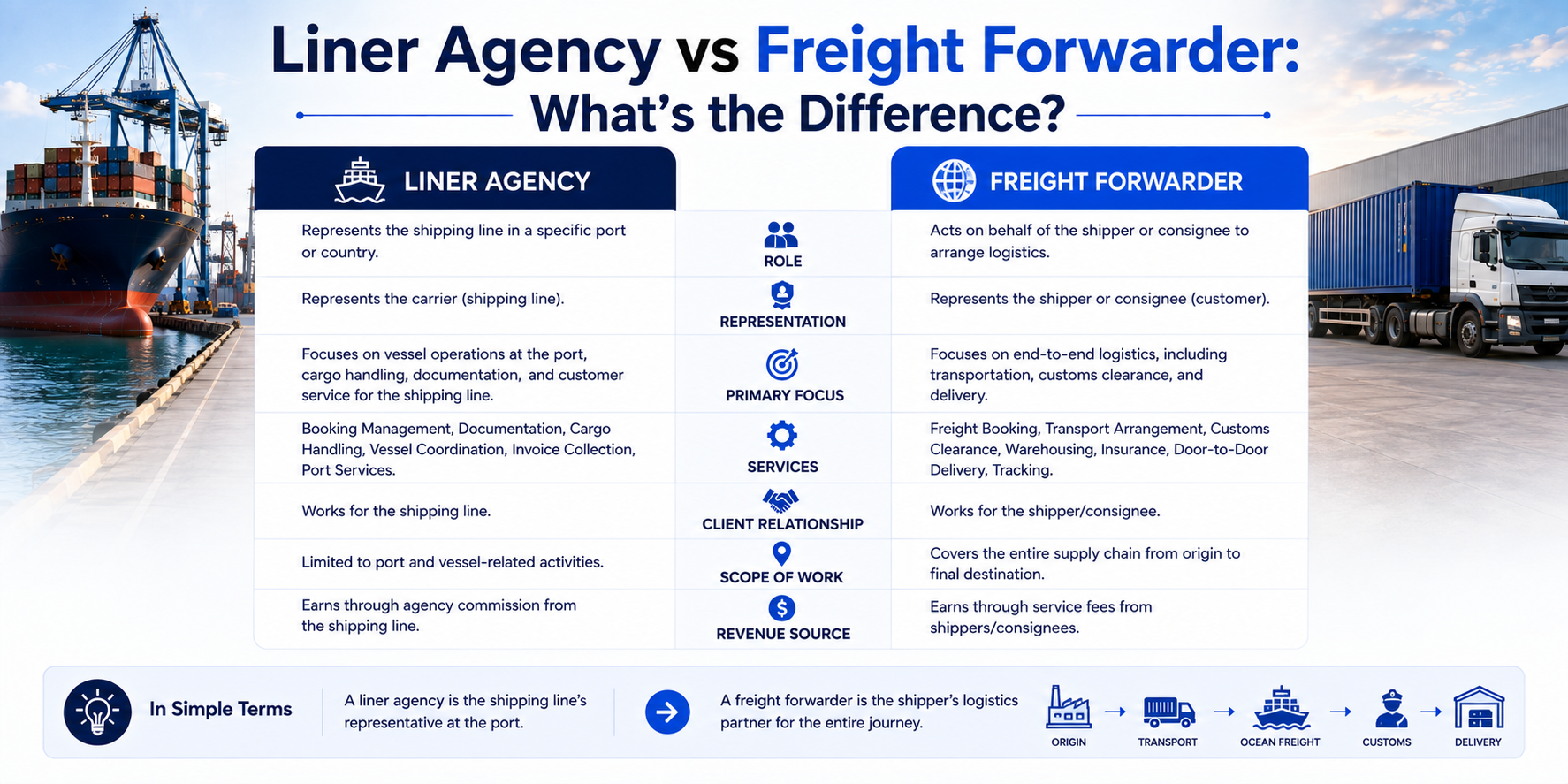
A liner agency represents a shipping line in a particular country or port. It works as the local face of that line — managing vessel operations, cargo, and communication between all parties involved in trade.
Here’s what a liner agency typically handles:
- Vessel coordination: Arranging berths, handling schedules, and ensuring smooth port calls.
- Cargo operations: Managing bookings, loading plans, and container tracking.
- Documentation: Preparing bills of lading, manifests, and customs paperwork.
- Customer communication: Keeping shippers, consignees, and authorities informed.
- Port relationships: Coordinating with terminals, customs, and transport companies to avoid delays.
These agencies don’t own ships—they manage them on behalf of the shipping line. Their efficiency often decides whether a vessel stays on schedule or falls behind.
What Are the Core Responsibilities of a Liner Agency?
Running a port call might look routine from the outside, but for a liner agency, every minute counts. Their job goes far beyond paperwork—it’s about precision, timing, and trust.
Here’s what a liner agency is responsible for:
1. Port and Vessel Coordination They arrange berths, pilotage, and tugs—ensuring vessels dock and depart on schedule. One slip can ripple across entire shipping routes.
2. Cargo Management Handling container bookings, stowage plans, and discharge operations with accuracy. Their control over cargo flow keeps trade efficient and error-free.
3. Documentation Control Managing bills of lading, manifests, and customs papers. Even one mistake here can stop a vessel or delay cargo clearance.
4. Financial Handling From port dues to local payments, liner agencies manage the financial side on behalf of shipping lines—keeping transactions clean and transparent.
5. Customer and Stakeholder Liaison They stay in constant touch with shippers, importers, and port officials—making sure everyone is updated and aligned.
When things go right at sea or at port, it’s often because a liner agency was doing its job quietly, perfectly, and on time.
Why Do Liner Agencies Matter in Global Trade?
Global trade depends on timing, coordination, and trust—and liner agencies are where all three meet. Without them, ships might wait longer at ports, cargo could get misplaced, and communication between shippers and authorities would break down.
Here’s why their role is so vital:
- They keep ports efficient.
Liner agencies manage vessel schedules to reduce waiting time and avoid congestion, helping ports handle more ships smoothly.
- They reduce trade delays.
Quick documentation and real-time communication prevent costly hold-ups, saving businesses time and money.
- They ensure compliance.
Every port and country has different regulations. Liner agencies help shipping lines follow these rules without error.
- They build trust across borders.
By acting as the shipping line’s local representative, they maintain relationships with exporters, importers, and customs—creating a bridge of confidence that keeps global trade stable.
A liner agency might not carry cargo or own ships, but it carries responsibility for timelines, accuracy, and the reputation of global trade itself.
How Do Liner Agencies Work Behind the Scenes?
Much of a liner agency’s work happens before the vessel even reaches the port. From planning and coordination to post-departure reporting, every action matters — because one small miss can ripple across entire trade routes.
Stage What Happens Purpose Impact if Missed 1. Pre-Arrival Coordination Confirm berth, arrange pilots and tugs, and complete customs paperwork. Ensure smooth vessel docking Vessel delays, demurrage costs, and port congestion. 2. Real-Time Communication Stay in touch with the captain, port, and terminals for live updates. Manage last-minute changes and avoid confusion. Miscommunication, wrong berthing time, or missed port slot. 3. Cargo Readiness Checks Verify containers are cleared, documented, and ready for loading. Avoid operational or customs delays. Containers left behind or wrongly loaded, affecting shipments. 4. On-Ground Supervision Agency reps oversee port handling and resolve issues on-site. Keep port work efficient and problem-free. Cargo mishandling, damage, or extended vessel turnaround. 5. Post-Departure Reporting Send voyage reports and bills to the shipping line Maintain transparency and track performance. Poor record-keeping, billing errors, and loss of accountability.
A liner agency’s success is measured not by visibility, but by how quietly and precisely everything gets done.
What Challenges Do Liner Agencies Face Today?
Even with experience and technology, liner agencies work in an environment full of moving parts. Every day brings new obstacles—some predictable, others not. Their success depends on how fast they adapt and respond.
Here are some of the biggest challenges they deal with:
1. Port Congestion and Delays With rising global trade, many ports operate beyond capacity. Liner agencies must constantly adjust schedules and manage expectations when berths aren’t available on time.
2. Documentation Pressure Each country has different rules and formats. Even a small mistake in a bill of lading or customs form can lead to fines or shipment holds.
3. Communication Gaps Across Stakeholders Shipping lines, freight forwarders, and port authorities often use different systems. Liner agencies spend significant time aligning everyone on one version of the truth.
4. Rising Costs and Tight Margins Handling charges, local taxes, and operational expenses keep increasing — but agencies are often expected to deliver faster and cheaper.
5. Technology Integration Many ports are going digital, yet not all systems connect seamlessly. Agencies need to invest in software and training to stay efficient.
6. Unpredictable Events Strikes, weather disruptions, and geopolitical changes can alter vessel routes overnight. Liner agencies are often the first to react and realign plans.
The real strength of a liner agency isn’t in avoiding problems—it’s in staying calm and capable when problems arrive unannounced.
How Is Technology Transforming Liner Agency Operations?
Technology has changed the way liner agencies plan, communicate, and deliver. What once took hours of calls and manual entries can now happen in minutes — thanks to automation, digital platforms, and real-time data.
Here’s how technology is making a real difference:
1. Digital Documentation Bills of lading, manifests, and port clearances are now handled electronically. This reduces human error, saves time, and improves data security.
2. Real-Time Vessel Tracking Agencies use live tracking tools to monitor ship positions, weather, and port congestion—helping them plan operations with better accuracy.
3. Integrated Port Systems Many ports now use centralized digital systems. Liner agencies can access berth schedules, cargo updates, and customs data in one place, ensuring faster coordination.
4. Automated Alerts and Communication From ETA changes to cargo readiness updates, automated systems keep shippers, consignees, and authorities informed instantly.
5. Analytics and Performance Tools Modern liner agencies use data analytics to measure turnaround time, predict delays, and find ways to improve efficiency.
In an industry built on time and trust, digital tools don’t replace liner agencies—they strengthen them, making every decision faster, clearer, and more reliable.
What Does the Future Hold for Liner Agencies in Maritime Trade?
The world of shipping is changing fast. Sustainability goals, digital ports, and smarter logistics systems are rewriting how maritime trade works.
In this shift, liner agencies will remain the beacon of coordination—adapting, learning, and leading from the ground up.
Here’s what the future is likely to bring:
- Closer Collaboration with Ports
Ports and liner agencies will work even more closely through shared digital platforms, improving scheduling, data sharing, and operational transparency.
- Sustainability Compliance
As shipping lines move toward greener operations, liner agencies will play a key role in tracking emissions data, managing eco-regulations, and ensuring compliance.
- Smarter Automation
Routine tasks like documentation and invoicing will become fully automated, allowing agencies to focus more on decision-making and problem-solving.
- Expanded Regional Roles
Many liner agencies are now managing multiple ports under one umbrella, offering integrated regional solutions for global carriers.
- Human Expertise Remains Vital
Even as automation grows, the judgement and adaptability of experienced liner agents will continue to guide shipping operations through uncertainty.
The future of liner agencies isn’t about replacing people with technology—it’s about using technology to make people more effective, more trusted, and more connected.
Why Liner Agencies Will Always Matter
Behind every container, schedule, and port call lies the work of a liner agency — planning, checking, and coordinating with precision. Their presence ensures that trade doesn’t just happen; it happens on time and with trust.
Even as automation, AI, and digital systems reshape shipping, one truth remains: global trade still depends on people who understand its pulse. Liner agencies are those people—the beacons of reliability who stand steady amid changing tides.
The world may evolve, but the need for dependable coordination at every port will never fade. And that’s what keeps liner agencies not just relevant but essential.
Tags- Logistics
- Global Trade
- SJ Logistics
- Liner Agencies
- Shipping Agents
- Liner Agencies
- Shipping Line
- Liner Agencies
- Liner Agencies